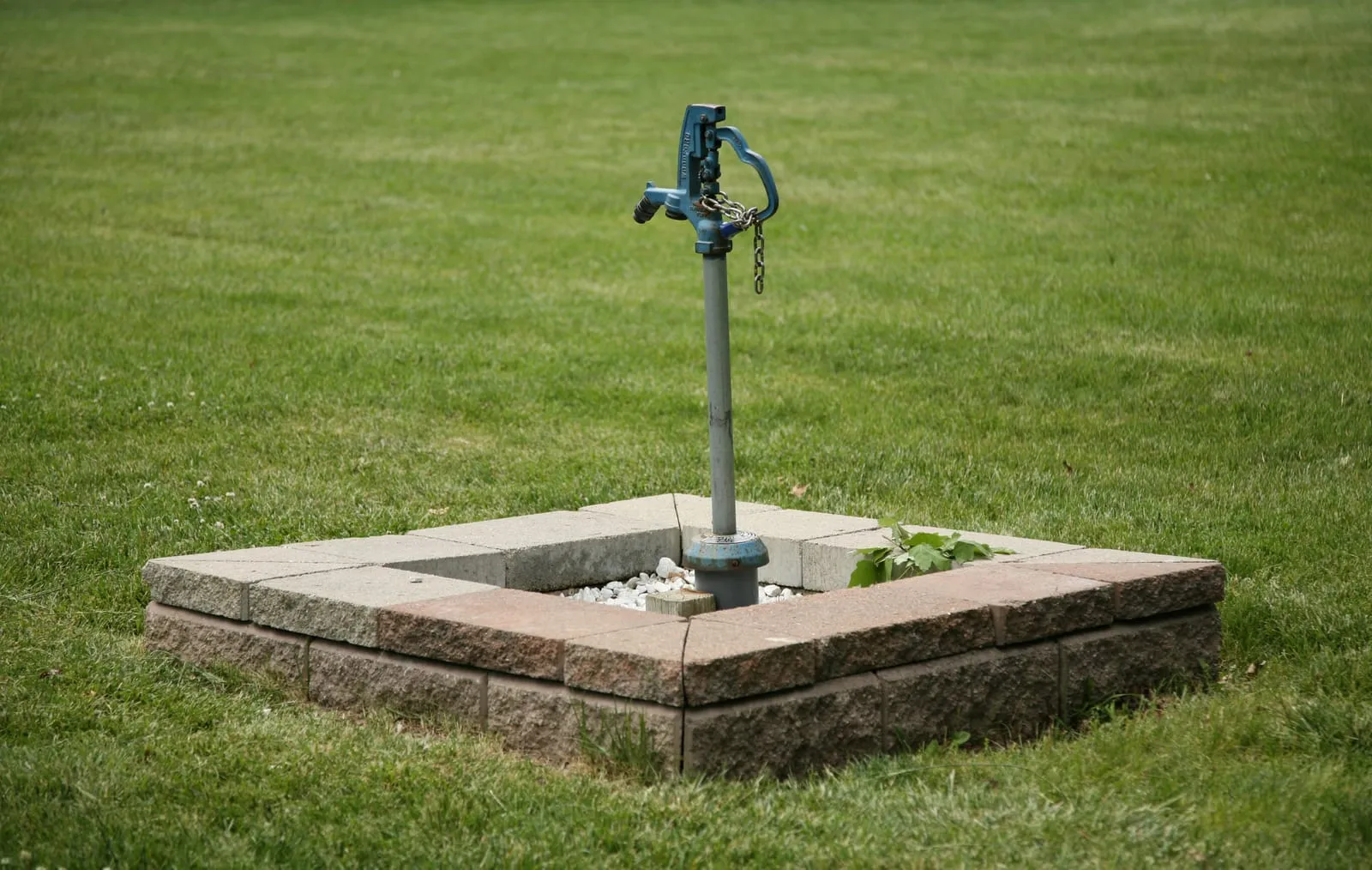

Quick answer: in Virginia, the test that counts is a lab test. The Virginia Department of Health (VDH) recommends testing a private well for bacteria and nitrate every year using a lab accredited under the Virginia Environmental Laboratory Accreditation Program (VELAP) [1]. A mail-in lab kit is a convenient way to do the broad panel, and home screening kits are useful in between. The cheapest route is often a Virginia Household Water Quality Program clinic through your Extension office [1][2].
Nobody tests a private well for you. Public water systems are regulated, but maintenance and testing of a private well are the owner’s job, and about 1.7 million Virginians, or 22%, rely on wells, springs and cisterns [3].
At a glance
- Virginians on private water
- About 1.7 million, or 22% [3]
- Samples tested by the Extension program in 2022
- 3,011, from 90 of Virginia's 96 counties [3]
- Most common health-related finding in 2022
- Total coliform bacteria, in close to 40% of samples [3]
- 2022 clinic participants who had never tested before
- 43% [3]
- VDH yearly tests
- Bacteria and nitrate [1]
Why Virginia wells need a yearly check
The Virginia Household Water Quality Program’s 2022 report found total coliform bacteria in close to 40% of the 3,011 samples it analyzed, and water with a pH below 6.5 in more than 20%. E. coli, sodium, copper and lead also showed up in a meaningful share of samples [3]. Coliform matters because, as Virginia Cooperative Extension explains, it signals that surface water may be getting into the well; E. coli points to human or animal waste [4].
Low pH matters too. Acidic water can pull lead and copper out of household plumbing, which is why VDH recommends testing for lead more often when the water’s pH is below 6 [1].
VDH’s schedule [1]:
- Every year: total coliform and E. coli bacteria, and nitrate.
- At first, then every 5 years if there are no problems: basic indicators including arsenic, copper, iron, lead, manganese, pH, hardness, sodium and others.
- At least once: radiological (uranium, gross alpha, radon).
- Every 5 years if children under 5 drink the water: fluoride.
- Right away: if the wellhead floods, or the water changes in taste, color or smell.
How we chose
- Lab-based first. We put a lab kit at the top because VDH and Extension say bacteria results are only reliable from a lab [1][4].
- The maker says exactly what’s tested. Each kit below lists its parameters on the maker’s own page. We skipped kits that don’t.
- Covers VDH’s yearly tests. Every kit below includes a coliform bacteria test and, except the single-purpose bacteria kit, nitrate.
- No recall. We searched the Consumer Product Safety Commission recall database for each brand on November 2, 2026 [9].
Our picks
Best for: A broad first baseline on a well you've never tested
Safe Home Ultimate Drinking Water Test Kit (In-Lab)
You collect the sample at home and ship it to the company's lab, which reports about 200 parameters, including lead, arsenic, nitrate, nitrite and pH. The maker says it's mainly bought by well owners.
- About 200 parameters: 31 metals, 12 physical properties, 7 inorganics, about 150 organic compounds [5]
- Results in 7 to 10 business days after the lab receives the sample [5]
- Prepaid return shipping for U.S. residents [5]
- Includes a do-it-yourself coliform and E. coli test [5]
Safety check: Safe Home describes the analysis as certified laboratory testing [5]. Check that the lab's results will be accepted for your purpose, such as a home sale. No CPSC recall found for Safe Home (checked 2026-11-02) [9].
Watch out: Bacteria isn't part of the lab panel; it's a home test in the box. Uranium isn't listed. For the yearly bacteria test VDH recommends, use a VELAP-accredited lab or an Extension clinic.
See it on Amazon → We chose it from specs and safety records; we haven't tested it ourselves.
Best for: Screening a well at home for arsenic, nitrate and bacteria in one box
Safe Home Essential Well Water Test Bundle (DIY)
It combines Safe Home's 12-parameter strips with separate home tests for lead, coliform bacteria and arsenic, which matters because arsenic is on VDH's list of basic indicators for wells.
- Strips: nitrate, nitrite, pH, hardness, iron, copper, alkalinity, fluoride, chlorine and more [6]
- Home tests for lead, coliform bacteria (including E. coli) and arsenic [6]
- Arsenic test detects down to 10 ppb [6]
- Bacteria result in up to 24 hours; other tests about 30 minutes or less [6]
Safety check: No lab analysis is included; it's a screening kit [6]. No CPSC recall found for Safe Home (checked 2026-11-02) [9].
Watch out: Test strips give a range, not a lab number. A positive or borderline result means it's time for a lab test, not a treatment decision.
See it on Amazon → We chose it from specs and safety records; we haven't tested it ourselves.
Best for: A low-cost check of lead and bacteria between yearly lab tests
Watersafe Drinking Water Test Kit
Silver Lake Research says the kit is suitable for tap or well water and detects lead at 5 parts per billion and bacteria at 1 per milliliter, along with nitrates, iron, copper and chlorine.
- Lead detection at 5 ppb [7]
- Bacteria detection at 1 bacteria/mL [7]
- Also tests nitrates, iron, copper and chlorine [7]
- Made in the USA [7]
Safety check: Home screening kit; no lab certification claimed. No CPSC recall found for Watersafe or Silver Lake Research (checked 2026-11-02) [9].
Watch out: The maker says it tests 9 contaminants but names only some of them on its page, and doesn't say how long results take.
See it on Amazon → We chose it from specs and safety records; we haven't tested it ourselves.
Best for: A quick re-check after shock chlorination or a well repair
Watersafe Bacteria Water Test
It's a single-purpose bacteria test that detects coliform (including E. coli) and non-coliform bacteria, sold in packs of 1 to 12, so you can re-check as needed.
- Detects coliform (including E. coli) and non-coliform bacteria [8]
- Detection level: 1 bacteria/mL [8]
- Results in as little as 6 hours; up to 24 to 48 hours at low levels or cool temperatures [8]
- Made in an FDA-registered U.S. facility [8]
Safety check: Home screening test. No CPSC recall found for Watersafe or Silver Lake Research (checked 2026-11-02) [9].
Watch out: A negative home result doesn't replace the lab test VDH recommends after flooding or repairs. The maker's store showed it out of stock when we checked.
See it on Amazon → We chose it from specs and safety records; we haven't tested it ourselves.
Buying guide
- Find out what’s normal near you. Virginia Cooperative Extension publishes well results by county, and your local Extension office can tell you when the next clinic is [2][3].
- Use a lab for the baseline and the yearly bacteria test. VDH lists VELAP-accredited labs; follow the lab’s sampling instructions closely, since many samples must be kept cold and delivered within a set time [1]. Extension notes bacteria samples need analysis within about a day of collection [4].
- Use home kits to screen. Strips and home bacteria tests are a quick way to spot a change between lab tests.
- Test after events. Flooding near the well, a change in taste or color, a new baby in the home, or plumbing work are all reasons to test again [1][4].
Sources
- Virginia Department of Health: Guidance on Testing Your Private Well Water
- Virginia Household Water Quality Program (Virginia Cooperative Extension)
- Virginia Household Water Quality Program: 2022 Annual Report
- Virginia Cooperative Extension, publication 442-662: bacteria testing for private water supplies
- Safe Home: Ultimate Drinking Water Test Kit (In-Lab)
- Safe Home: Essential Well Water Test Bundle
- Silver Lake Research: Watersafe Drinking Water Test Kit
- Silver Lake Research: Watersafe Bacteria Water Test
- U.S. Consumer Product Safety Commission: Recalls (searched November 2, 2026)
Common questions
How often should I test my well in Virginia?
The Virginia Department of Health recommends testing for bacteria and nitrate every year, a broader panel of basic indicators at first and then every 5 years if there are no problems, and radiological testing at least once. Test again if the wellhead floods or the water changes in taste, color or smell.
Is a home test kit good enough?
For a decision about whether your water is safe to drink, no. VDH and Virginia Cooperative Extension say bacteria results are only reliable from a lab, and VDH points well owners to labs accredited under the Virginia Environmental Laboratory Accreditation Program. Home kits are useful for screening between lab tests.
Is there a low-cost testing option in Virginia?
Yes. The Virginia Household Water Quality Program, run by Virginia Cooperative Extension, holds drinking water clinics around the state. Contact your local Extension office for dates and current cost.