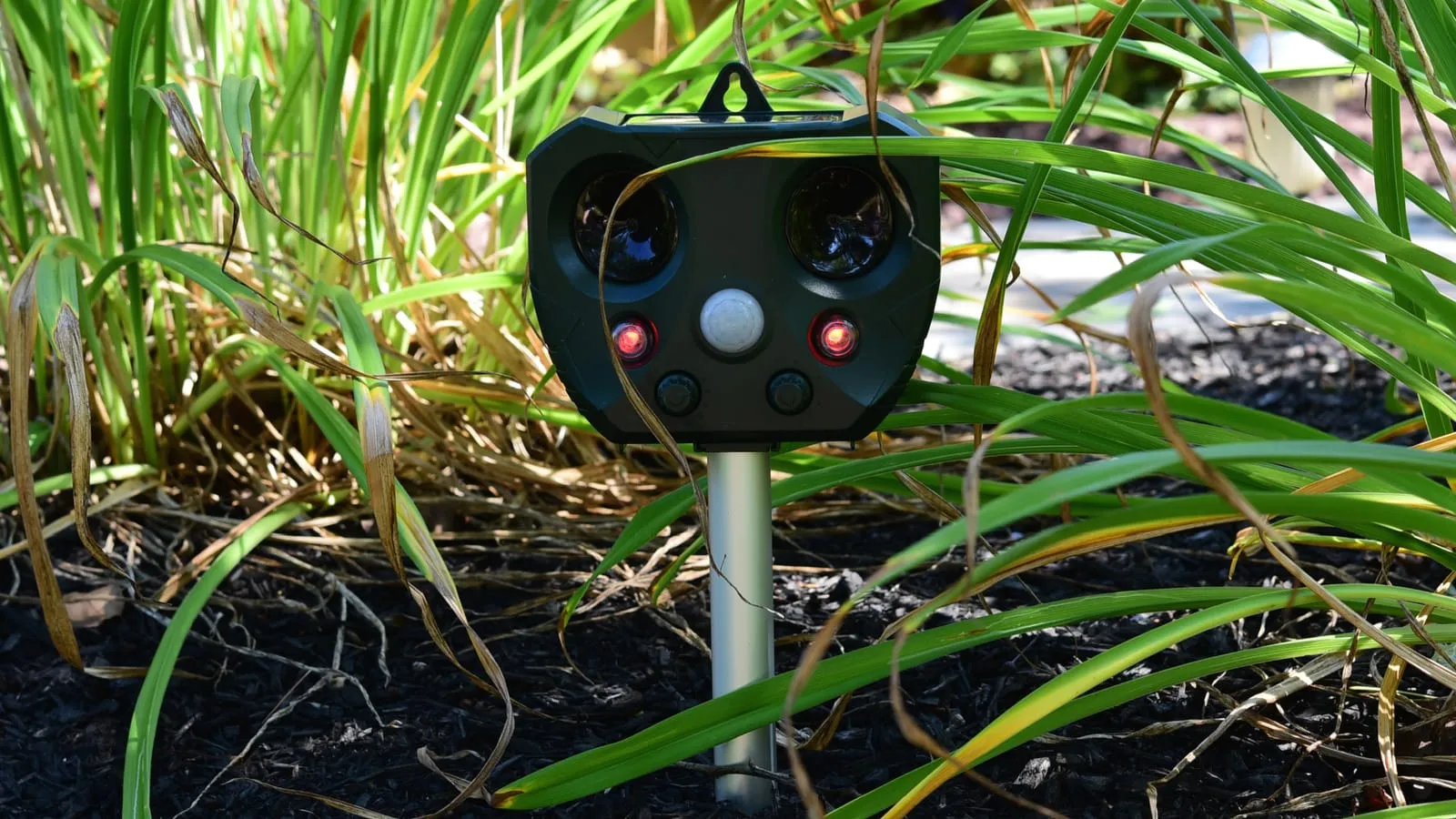

Quick answer: if deer are eating your Virginia garden, a fence is the most reliable fix; the Virginia Department of Wildlife Resources (DWR) calls a 5 to 8 foot fence “the single best method” [1]. Where a fence isn’t practical, a repellent applied before damage starts and reapplied on schedule can protect shrubs, flowers and bulbs. The four below have clear labels that say what’s in them and how often to spray.
At a glance
- DWR's top recommendation
- A 5 to 8 foot fence around the garden [1]
- What most repellents are made of
- Pepper or sulfur, according to DWR; most wash off with the first rain [1]
- Statewide feeding ban
- September 1 to the first Saturday in January [2]
- Year-round feeding ban
- More than 40 counties and the cities and towns in them, including Fairfax, Loudoun, Prince William and Roanoke [2]
- Why the ban matters
- Feeding concentrates deer near homes and roads, raising plant damage and deer-vehicle collisions [2]
What Virginia’s wildlife agency says
DWR’s advice for homeowners, in its own order [1]:
- Fence it. A 5 to 8 foot fence around the garden.
- Plant what deer don’t like. DWR names juniper, hawthorn and other prickly or thorny plants.
- A dog helps. Deer usually avoid properties where a dog roams.
- Repellents and scare tactics work for a while. Most repellents are pepper- or sulfur-based and most wash off with the first rain; scare products use predator urine, sulfur or human scent; deer can get used to noise and hazing.
Don’t feed them. Feeding deer for any reason is illegal statewide from September 1 to the first Saturday in January, and illegal year-round in more than 40 counties, including Albemarle, Arlington, Augusta, Fairfax, Fauquier, Loudoun, Prince William, Roanoke, Spotsylvania and Stafford, plus the cities and towns inside them [2]. DWR says feeding makes deer lose their fear of people, draws them toward homes and roads, and can spread disease, including chronic wasting disease [2]. If deer are eating your plants, check that a neighbor isn’t putting out corn.
If damage is severe, DWR also offers a Damage Control Assistance Program and kill permits for landowners, starting with a meeting with a DWR representative [1].
How we chose
- The label says what’s in it and how to use it. We used the maker’s label or product page for ingredients and reapply schedules, and skipped products that don’t publish them.
- Different jobs. One scent-based spray, one spray for growing season, a granular product for bulbs and low plants, and one for gardeners who prefer a mint scent.
- No recall. We searched the Consumer Product Safety Commission recall database for each brand on November 2, 2026 [7].
Our picks
Best for: Shrubs and flower beds you can spray about once a month
Liquid Fence Deer & Rabbit Repellent Ready-To-Use (32 oz)
It works on scent, so deer don't have to take a bite to be repelled, and the label gives a clear schedule: spray, repeat a week later, then about once a month.
- Active ingredients: putrescent whole egg solids, garlic, potassium sorbate, sodium lauryl sulfate, thyme oil [3]
- Covers up to 500 sq ft [3]
- Heavy pressure: weekly for three weeks, then about monthly [3]
- Label says it doesn't need to be rotated with other brands [3]
Safety check: The maker states it's a minimum-risk product exempt from EPA registration under FIFRA [3]. The label carries a CAUTION statement: may be harmful if swallowed; avoid eye contact. No CPSC recall found (checked 2026-11-02) [7].
Watch out: It smells strongly until it dries, and the label says to apply during a dry period, which can be hard to find in a wet Virginia spring.
See it on Amazon → We chose it from specs and safety records; we haven't tested it ourselves.
Best for: Gardeners who will spray every week or two in the growing season
Bobbex Deer Repellent
The maker gives detailed timing: start when plants are about half an inch out of the ground, then spray every 7 to 14 days in summer; dormant-season sprays last up to two months.
- Ingredients include putrescent eggs, fish meal, fish oil, garlic and cloves [4]
- Summer: reapply every 7 to 14 days or after 1 to 2 inches of new growth [5]
- Don't spray above 85°F or below 35°F [5]
- Sold ready-to-use and as a concentrate [5]
Safety check: The maker says it's safe for people, pets and wildlife when used as directed [4]. No CPSC recall found (checked 2026-11-02) [7].
Watch out: Not for leafy vegetables or herbs, and on fruit only through the bud stage [5]. Summer spraying every one to two weeks is a real time commitment.
See it on Amazon → We chose it from specs and safety records; we haven't tested it ourselves.
Best for: Tulip and other bulb beds and plants under 2 feet tall
Plantskydd Granular Repellent (3.5 lb)
It's a granular dried-blood repellent you sprinkle around and under low plants and into bulb holes at planting, with a label claim of 6 to 8 weeks per application.
- Active ingredient: 100% dried blood (porcine and/or bovine) [6]
- Effective 6 to 8 weeks, per the label [6]
- Covers up to 4,000 sq ft per 3.5 lb [6]
- OMRI Listed for organic use [6]
Safety check: EPA exempt under FIFRA section 25(b), per the label [6]. No CPSC recall found for Plantskydd or its maker, Tree World (checked 2026-11-02) [7].
Watch out: The label says it may stain concrete, brick and wood, and not to apply it directly onto edible crops. For plants over 2 feet, the maker points you to its spray instead [6].
See it on Amazon → We chose it from specs and safety records; we haven't tested it ourselves.
Best for: Patios and front beds where you'd rather smell mint than egg
I Must Garden Deer Repellent (Mint scent, 32 oz spray)
It comes in mint or spice scents, in ready-to-use, concentrate and granular forms, which helps if you want to rotate scents through the season.
- Ready-to-use sizes from 32 oz to 2.5 gallons; concentrates from 32 oz [8]
- Mint or spice scent [8]
- Maker describes it as long-lasting and rain-resistant [8]
Safety check: The maker says it's people, pet and plant safe when used as directed [8]. No CPSC recall found (checked 2026-11-02) [7].
Watch out: The maker's product page doesn't list active ingredients or a reapply interval; read the label on the bottle before buying.
See it on Amazon → We chose it from specs and safety records; we haven't tested it ourselves.
Buying guide
- Start before the damage. Plantskydd’s label says to apply before browsing begins; Bobbex starts when shoots are half an inch tall [5][6].
- Match the form to the plant. Sprays for shrubs and taller perennials; granules for bulbs and plants under 2 feet [6].
- Plan to reapply. DWR notes that most repellents wash off with the first rain [1]. Mark a calendar, and respray new growth.
- Combine methods. Repellents protect small areas. For a vegetable garden, DWR’s top pick is a fence [1].
Sources
- Virginia Department of Wildlife Resources: Deer (nuisance wildlife)
- Virginia Department of Wildlife Resources: Feeding Deer
- Liquid Fence: Deer & Rabbit Repellent Ready-To-Use2 product label
- Bobbex: Deer Repellent
- Bobbex: When and How to Apply Bobbex
- Plantskydd (Tree World): Granular Repellent specimen label
- U.S. Consumer Product Safety Commission: Recalls (searched November 2, 2026)
- I Must Garden: Deer Repellent
Common questions
What works best to keep deer out of a Virginia garden?
Virginia's Department of Wildlife Resources calls a 5 to 8 foot fence around the garden the single best method. Repellents help on smaller areas, but DWR notes most wash off with rain, so they need regular reapplication.
Is it legal to feed deer in Virginia?
Not in fall and early winter anywhere in the state: feeding deer is illegal statewide from September 1 to the first Saturday in January. In more than 40 counties, including Fairfax, Loudoun, Prince William, Albemarle and Roanoke, it's illegal year-round.
Do I need to switch deer repellents?
Not necessarily. Liquid Fence's label says its scent-based product doesn't need rotating. Watch your plants: if damage comes back on any repellent, try a different product or add a barrier such as a fence.